What is a self-managed super fund (SMSF)?

Here's everything you need to know...

A self-managed super fund (SMSF) is a type of super fund that you run yourself. It's just for you and anyone else you invite to join – this could be family, business partners, or even friends.

SMSFs are still governed by the same super and tax laws as all other super funds, but as long as you operate within those rules, you have complete control over how your super is invested, who helps you manage it, how much and what type of insurance you have, and more.

It's the most flexible superannuation option available. In fact, it's a super fund for life.

Learn more about SMSFs

Whether you're still considering or ready to move forward, the information below can help you make an informed decision about whether an SMSF suits you and aligns with your financial goals.

Our Client Services Consultants are just a phone call or email away should you have any questions or need more information on anything you're unsure about.

1 Benefits of an SMSF
Pros and cons of an SMSF

Thinking about starting an SMSF? Make an informed choice for your circumstances by understanding what is involved in managing your own superannuation.

2 How to set up an SMSF
How to set up an SMSF

We’ll walk you through the decisions you'll need to make, the documentation required to apply, and the steps you will take to set up your SMSF.

3 Start managing an SMSF
Start managing an SMSF

We explain your obligations as a trustee, how to get started investing, setting up and managing contributions, and what to expect at the end of each financial year.

Self managed super fund (SMSF) benefits and disadvantages

What to consider before you start an SMSF

An SMSF can give you greater control and flexibility over your super. While it comes with added responsibilities, the potential benefits can be significant. We’ve pulled together the key information that will be useful to you in deciding if an SMSF suits your goals, needs and financial circumstances.

Jump to...

Self managed super fund pros and cons

In Australia, superannuation represents one of the largest assets most people will accumulate over their lifetime. Here are the main advantages and disadvantages of SMSFs.

 Pros  Cons
  • Investment control

  • Your super is set up for life

  • Can be more cost effective at scale

  • Ability to invest super together rather than separately

  • Greater tax planning flexibility

  • Greater estate planning control and flexibility

  • Personal responsibility

  • Time and potential complexity

  • Fewer protections from fraud or failure

  • Setup costs

  • Ongoing costs may be higher too

  • Potentially less investment diversification


We go into more detail about the pros and cons of SMSFs here.

Self-managed super fund vs other super funds

There are three main types of super funds in Australia:

  • Industry Funds – Historically tied to specific industries or unions but now often open to all

  • Retail Funds – Operated by financial institutions and open to all

  • Self-managed super funds – Made up of 1-6 members (usually family/close associates), a member controlled private fund

Not all retail funds are the same and there is also a lot of variety among different industry funds these days. However, there are some broad generalisations we can make about each type's distinct characteristics that make them more suitable for some people than others.


Super fund comparison

  Retail funds Industry funds SMSF

Ownership structure

Managed by for-profit financial institutions.

Profit for members.

Member-controlled private fund.

Who can join

Open to all.

Mostly open to all.

Virtually anyone can create their own.

Investment control

Controlled by trustee – generally very wide range with considerable choice between professionally managed and self directed options. Typical limits on how much can be invested in any one asset.

Controlled by trustee – often more restricted than retail funds. Mostly professionally managed rather than self directed options.

Full investment control by members. Anything allowed by the law and trust deed.

Investment structure

Each member account entirely separate.

Each member account entirely separate.

All members combined – couples manage super investments together.

Fees

Mostly % assets. Historically higher fees than industry funds but many now highly competitive.

Combination of fixed and % assets. Historically lowest fees.

Most costs fixed – so often most expensive for smaller balances.

Insurance

Comprehensive insurance options.

Generally more limited insurance but at competitive cost.

Arrange own insurance tailored to members' specific needs – but often more expensive.

Key Features

Operated by banks, insurers, investment companies.

Operated by union/industry groups.

Members are trustees, direct control over all aspects.

Pros

Extensive investment and insurance choice.

Generally lower fees.

Maximum control and flexibility for investing, tax and estate planning, administration, choice of suppliers.

Cons

Higher fees, flexible but more restrictive than SMSFs.

Generally less investment choice, less personalised service.

Complete responsibility for compliance and decision making often unaffordable at lower balances (say less than ~$200k).


How does an SMSF work?

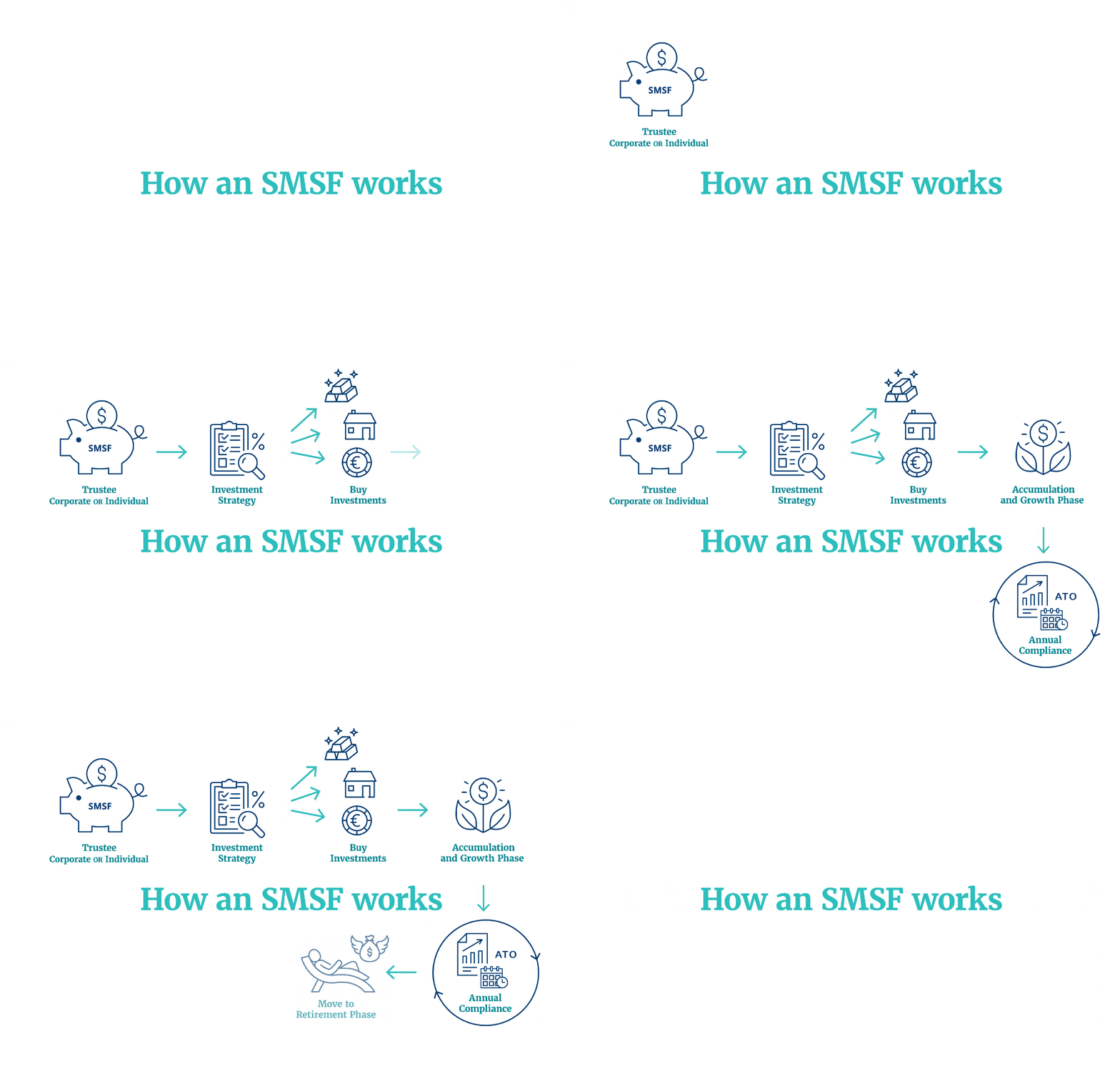
SMSFs operate under the same basic principles as other super funds – money goes in during your working years, grows through investments, and provides income during retirement.

A self managed super fund is unique in that almost everything about it can be changed without the members needing to move to a new fund. It's a super fund for life.

The key difference is that you are in full control and are liable for the decisions you make. You decide how fund investments are made and can invest in:

  • Shares;

  • Bonds;

  • Managed Funds;

  • Residential or Commercial Property;

  • Term Deposits;

  • Exchange Traded Funds (ETFs);

  • or other approved investments including crypto currency and collectables.

This means you can implement investment strategies not available through traditional super funds.

Most people bring in specialist help rather than doing everything on their own – for example, an accountant or financial adviser (or both). At the end of the day however, you will be ultimately accountable. 

Additionally, SMSFs provide greater transparency – you know exactly where your money is invested and can access detailed reporting on all transactions and performance. For families, SMSFs allow you to invest your super together and give you more control and flexibility over how your super is dealt with when you die.

How-SMSFs-work-Animation-sm-v3

SMSF Rules you'll need to follow  

Like all super funds, SMSFs have to follow rules. Unlike other funds, you (as one of the trustees) are responsible for making sure they're followed. 

Your fund needs to meet:

  • The sole purpose test

    • Your fund has to be operated solely to provide retirement benefits to its members. You can’t set up an SMSF because you want to use your super money to do things that benefit you personally.

  • Specific investment rules

    • There are some things no super funds (including SMSFs) are allowed to invest in. For example, no super funds can lend money to their members.

    • There are also rules about who your SMSF can buy certain assets from. For example, it won't be able to buy a residential property from you, but it could buy one from someone unrelated to you.

    • Your SMSF also can't let the members use the investments for personal purposes. For example, you can't buy artwork in your SMSF and hang it in the wall of your house.

    • If you intend to invest in things like listed shares, managed funds, term deposits etc you're unlikely to have any trouble complying with these rules.

  • Rules for contributions into the fund

    • There are rules about when you're allowed to put money into super (for example, you have to be under age 75 for most types of contribution). There are also rules about how much you and your employer can pay into your super each financial year without creating a tax problem for yourself. (This is actually the same in any super fund but people often start increasing their contributions when they set up an SMSF so it pays to understand the tax rules.)

  • Rules for paying money (benefits) out of the fund

    • You can only take money out of your super once you meet certain age or other requirements. Even in an SMSF, you can’t use your retirement savings personally before you’re allowed to. 

You’ll also be responsible for:

  • managing the fund's investments;

  • keeping the right records;

  • arranging an annual audit;

  • lodging annual returns with the ATO; and

  • choosing who (if anyone) helps you with all of these obligations.

Failure to follow the rules can mean significant penalties and extra taxes, so understanding them is critical to your fund's success.

What does an SMSF cost

SMSF Costs are largely fixed regardless of your fund balance, which is why SMSFs generally become more cost-effective as your super balance grows. There’s no magic number that is “enough” for an SMSF. For some people, an SMSF is highly cost effective when their super balance is as little as $100,000. For others, it’s over $1m or even higher. It will depend on the choices you make such as:

  • how much help you buy in to help you run your SMSF (and what that costs);

  • who you engage for your fund’s accounting, tax and audit work;

  • how you invest;

  • and more.

SMSF set up costs

Set up costs typically range from $1,500–$2,000 depending on who you ask to do it for you and choices you make about the set up of your fund. For example, most people set up a special company as part of setting up a new SMSF and this alone adds around $1,000 to the cost.

Yearly SMSF operational costs

While SMSFs can be cost-effective for larger balances, they come with various ongoing expenses that you need to budget for.

Annual costs usually include services that are facilitated by an SMSF administrator (accountant):

  • accounting fees for financial statements and tax returns ($2,000-$5,000); and

  • SMSF audit fees ($500-$800).

You will also pay an annual levy to the ATO when you lodge your fund’s tax return each year (around $250-300).

Other potential costs may include:

  • fees to other regulators such as ASIC if you set up a company to be the trustee of your SMSF;

  • investment fees;

  • insurance premiums;

  • advice fees; and

  • legal fees.

Before you do anything...

Remember an SMSF is not a set-and-forget solution and you'll always need to spend some of your time managing your investments, SMSF administration and documentation for compliance etc. The key to managing your SMSF success lies in being informed, staying compliant, maintaining good records, and choosing the right help at the right time.

Unwinding an SMSF can be time-consuming – so only set up an SMSF once you’ve thought about it carefully. Consider speaking with a financial adviser who can assess your individual circumstances and help determine whether an SMSF is right for you.

With proper support, anyone can successfully manage an SMSF. When you partner with Heffron as your SMSF administrator, we help you understand your responsibilities while maximising your SMSF's potential.

Learn how to set up an SMSF

Go back to top 🔼

Dive Deeper

Learn more about one of these topics.

Roles in an SMSF

Learn about the different roles in an SMSF, their rights and responsibilities.

Trustee Responsibilities

Learn about your responsibilities and obligations as a trustee. 

Shared investing

Learn why some people combine their super for shared investing in an SMSF.

How to set up a self-managed super fund (SMSF)

Establishing an SMSF involves several key steps that must be completed in the correct order. The process usually takes 6-8 weeks but can take longer depending on how prepared you are and the decisions you make.  

Follow these steps to set up your SMSF

Setting up an SMSF takes time. Actually 'creating the fund' can happen in under a week, but reaching the point where you're able to transfer money to it or buy assets can take far longer – often 6-8 weeks. In some instances even longer.

Jump to...

Before you do anything...

While some of these steps can happen very quickly (even instantly), you should allow at least 6-8 weeks even if you’re very prepared. This is because the ATO needs to formally approve your fund before it’s completely set up and ready to receive money.

  • Check with your lender if planning to borrow to invest in property – If you’re already considering the purchase of property within the fund you should first speak with your lender to confirm they will be able to set up a special type of loan agreement (it’s called a “Limited Recourse Borrowing Arrangement” or “LRBA”) within your SMSF when the time comes. Doing this first can save you a lot of time and heartache if for whatever reason you’re unable to borrow money to invest.

  • Consider your insurances – You might have insurance in your current super fund. Remember you'll lose that if you transfer all your super to your new SMSF. If you want to keep it, you'll need to leave some money inside your existing industry / retail fund. Learn more about insurances.

  • Choose your suppliers – At the very least you'll need to appoint an SMSF administrator / accountant for your new SMSF. IF you set up a fund with Heffron we will fill that role. If you want someone else to do it, you will need to find out how to set up a fund with them.

Steps to set up your SMSF 

Below we have outlined the steps you will need to take to start an SMSF including the decisions you’ll need to have made and the documentation you may be required to have ready in order to progress to registering with the ATO. You will also see in the right columns 'Who does what' and the approximate timings for each step.

If you’ve chosen Heffron to set up and handle the ongoing tax and compliance work for your fund we will do most of these steps for you and prompt you when you need to do something. Learn more about setting up an SMSF with Heffron.

Steps Who does what Timings

1. Choose your SMSF structure

There are two types of trustee structures for a self-managed super fund (SMSF) – either a corporate trustee or an individual trustee. You have full control over your fund either way, but there are some important differences.

You

Up to you

2. Apply for Director ID/s

If you're setting up a corporate trustee you will need to apply for a Director ID (if you don’t already have one).

You

Immediate upon successful application

3. Choose Trustees / Members

Decide who will be part of the SMSF (you're allowed up to six) and ensure all members agree to their responsibilities as trustees. Learn more about who can set up an SMSF together and shared investing in an SMSF.

You

Up to you

4. Choose the name for your SMSF

Choosing your SMSF name is an exciting step in your SMSF journey. Over our years of experience, we have identified a number of tips for what to include in your SMSF name.

You

Up to you

5. Choose your accountant / tax agent

Most people engage an accountant or SMSF administrator to deal with the accounting and tax requirements for their SMSF. They will also be able to arrange the set up documents and registration.

You

Up to you

6. GST registration

Most funds don’t have to register for GST unless they’re investing in commercial property. But it may be worth doing anyway as you may be able to claim back some of the GST your fund pays on its purchases. If that is the case, you will need to register your SMSF for GST (this can be done by your tax agent as part of the set up process).

Accountant / Administrator

Immediate upon online registration

7. Organise legal documents

A qualified professional can prepare essential legal documentation, including the trust deed to establish your fund's rules and structure. If you've chosen Heffron to be your SMSF administrator and tax agent, we can do this for you.


Like all tax agents, we have to carry out some checks to verify the identity of all new clients. See how we'll verify your identity before we send your documents.

You

Up to you

Accountant / Administrator

Immediate or at worst 2-3 days

8. Register with the ATO

Apply for an Australian Business Number (ABN) and Tax File Number (TFN) and register the fund with the ATO.

You

Up to 56 days

Accountant / Administrator

9. ATO confirms 'complying status'

This is where the ATO tells you it's officially registered your SMSF. You won't be able to progress further until this has been issued.

ATO

Can vary significantly. Allow up to 45 business days.

10. Develop an investment strategy

Create a written investment strategy outlining how you (as trustee) will invest the fund's money and whether you'll take out insurance for the members. Every SMSF's investment strategy is different because it depends on your particular circumstances and your needs but your accountant / administrator will be able to provide a template to help you document your plans.

You

Up to you

11. Set up an SMSF bank account

Open a bank account in the name of the trustee of the SMSF for contributions, rollovers, and investment income.

You

Up to you

12. Add money to the SMSF

Organise for existing super to be transferred into your SMSF bank account (called a 'rollover'). If you're moving all your existing super into your SMSF you can initiate this in myGov. If you're only moving part of your existing super into your SMSF you'll need to contact your existing fund for their requirements. Download our Guide on how to manage rollovers.


Organise for your employer to start paying super contributions to your new SMSF bank account. 

You

Up to 3 business days

You

Variable


That's it! You're all set up.

Now the fun starts. Get started managing an SMSF.

Go back to top 🔼

Dive Deeper

Learn more about one of these topics.

SMSF Investment Strategy

An SMSF investment strategy is a legal document that is required by law. It explains your SMSFs investment objectives and your plan to achieve them.

SMSF Administrator

When deciding on whether to bring in an SMSF Accountant or an SMSF Administrator to help here are the key things to consider.

Limited Power of Attorney

When you assign an SMSF Administrator to look after your fund you will be asked to sign a 'limited power of attorney' or LPoA. What is it and what does it allow?

Get started managing an SMSF

Your SMSF is now legally established. So what’s next?

For the first year or two you'll get more familiar with the operational rhythm and annual compliance requirements for your SMSF. Throughout this time Heffron can help you every step of the way.

Lean on SMSF specialists to help you stay compliant

Running an SMSF does come with responsibilities but it’s important to note that you don’t need to do everything yourself. In fact most SMSF trustees use an accountant or SMSF administrator to help with compliance and record keeping. The first few years are really about understanding what’s required from you each year and what will be managed by your accountant or administrator.

Once your SMSF is up and running it's time to put it to good use.

Jump to...

Getting money into your SMSF

If you haven’t already, now is the time to make sure all the SMSF’s members have directed their employer contributions into your new SMSF unless they’ve decided not to do that.

Types of contributions

Your SMSF can receive:

  • employer contributions;

  • personal contributions; and

  • other types of contributions.

The rules vary depending on the type of contribution so it’s worth checking before you do something new. Learn everything you need to know about super contributions.

How to make a contribution

Some contributions require important paperwork at the time or before you make them. If you’re ever making a type of contribution you haven’t made before, check with your accountant, administrator or adviser first. 

Any member of the fund can also transfer their super from other super funds into the SMSF whenever they like (called a “rollover”). It doesn’t all have to happen when the fund is first set up. Read our guide for some handy tips on how to make this happen and some important checks to watch out for.

Note that only fund members are allowed to have contributions or rollovers added to the SMSF. If there’s someone you want to be part of your SMSF who didn’t join right at the start, they can join later. Just watch out for some important rules:

  • SMSFs can’t have any more than 6 members;

  • a new member has to formally join the SMSF (there are forms to fill in, documents to sign etc);

  • anyone who joins will almost always have to become a trustee (or director of the corporate trustee) as well. This means they have the same responsibilities, and often the same power, as you do even if they don’t actually have much money in the fund; and

  • the ATO will need to be told there’s a new member.

You should contact your SMSF accountant or administrator to set this up before the new member (or their employer) starts putting money into the SMSF.

Managing investments

An SMSF gives you direct control over your retirement savings and you can invest in a wide range of different things – we’ve described some of the asset classes available to an SMSF here.

But with that control comes significant responsibility. You’ll need to monitor the performance of your SMSF’s investments and make changes when required. Not everyone does this on their own. There are several ways in which people might get help with SMSF investments:

Professional Advice

Many SMSF trustees have financial advisers to help develop investment strategies and select investments. Others might have a stockbroker who helps with listed shares but they research other investment choices themselves. In both cases, the trustees are still ultimately in charge and have to make the final decisions but they have a lot of help along the way.

Investment Platforms

Some trustees use 'investment platforms'. These give access to different types of investments (listed shares, managed funds, term deposits, exchange traded funds etc) all in one 'place'. It can be very convenient for things like reporting as most investment platforms can provide reporting about performance of all investments together and consolidated reporting of all the tax information needed by your SMSF’s tax agent. They also make it easy to move between different investments as the platform will arrange the buys and sells for you.

Managed investment products

Many SMSFs hold investments like ETFs or managed funds, particularly when they first start. Those investments might then hold a range of different assets and asset classes. The trustee chooses (say) the ETF but then the trustee of the ETF chooses the underlying shares, bonds, property etc.

If these options don’t sound very 'self managed', don’t forget that SMSFs are really about taking control of your super savings rather than doing everything yourself at all times.

A few important things to remember before you start investing:

  • Be sure to familiarise yourself with one of the main fundamental requirements of superannuation and SMSFs, the 'sole purpose test'.

  • Keep SMSF money and assets entirely separate from your personal money and assets. Make sure you evidence that by owning your SMSF assets in the right legal name. Download our Guide.

  • Make sure the investments line up with your documented investment strategy.

  • Keep records of the transactions you make and decisions. Note that the amount of record keeping you do yourself will depend on how much information goes directly to your accountant or administrator each year.

Insurance

You may have kept your old super fund account open so that you can keep any insurance you have in super running. There’s nothing to stop you doing that indefinitely – just make sure you understand any rules you need to follow to keep the insurance in place. For example, does your old super fund require you to add to your account every now and again? Keep a minimum balance?

You can also set up insurance in your SMSF.

As with everything, there are pros and cons to having your insurance in super vs having personal insurance outside super. And there are also pros and cons to having your super insurance in your SMSF vs keeping it in your old fund. Weigh up your choices carefully before you do anything that would jeopardise any insurance cover you already have. Learn more about SMSF insurance.

Year-end compliance

There’s work to do at the end of each financial year (including the very first year) for your SMSF. Mostly this will be done by your SMSF accountant or administrator. But make sure you check with them so you know what they will do and what lies with you.

In particular, make sure you know what documents and information they need from you each year.

For example, some accountants will need you to provide copies of all bank statements, investment accounts, dividend statements etc for all your investments. Typically a specialist SMSF administrator will make sure this type of information comes directly to them via a data feed so you don’t need to gather it together yourself.

But even a specialist administrator will need some information from you. For example, if you make ad hoc payments from the SMSF (such as property expenses, insurance premiums etc) they will need to know what these were for and will need receipts or policy statements.

All this information is needed so your accountant or administrator can manage:

  • Your SMSF’s financial statements. These are the financial accounts prepared each year for your SMSF that show how much it’s received in income or spent on its expenses (called the “Operating Statement”) and how much it has in total (called the “Statement of Financial Position” or people sometimes refer to it as a Balance Sheet). The financial statements also show other information such as how the fund is divided up between the various members. Even if the SMSF only has one member, these are still required every year.

  • Your SMSF’s annual tax return. An SMSF must lodge a special return (which includes the fund’s tax return) every year. When it’s due depends on whether you lodge it yourself (generally 31 October) or whether you have a tax agent who does it for you. Even if you have a tax agent, the due date will depend on whether it’s your SMSF’s first year (in which case it will generally be 28 February) or subsequent years (in which case it’s 15 May for most SMSFs). The due date is brought forward if you didn’t lodge on time last year.

  • Independent audit. All SMSFs are audited every year by an independent, ASIC-registered auditor. The auditor will be checking that your fund complied with the super rules as well as making sure your financial statements are right.

Learn more about EOFY requirements.

Making changes

Inevitably you’ll want to change things about your SMSF over time. You might want to:

  • Add new members or trustees,

  • Remove a member or trustee,

  • Start taking money out of super because you’re retired,

  • Make contributions you’ve never made before,

  • Deal with the death of a member and more.

If and when you want to do some of these things talk to your adviser, accountant or administrator. They will be able to guide you through the legal requirements, help you understand your responsibilities and make sure you take advantage of all the opportunities you have now you’ve set up your SMSF. Learn about when things change in an SMSF.

When the time is right, access your funds

You can only access your superannuation benefits from the fund once you reach your preservation age or meet another condition of release. Learn more about benefits.

Go back to top 🔼

FAQs to help you manage an SMSF

Can my SMSF buy an investment property?

Yes, and it can even borrow to do so. But there are rules about who the SMSF buys the property from (for example, it can’t buy a residential property from you, someone in your family or another entity you control such as a family trust). Learn more about the rules of SMSF investing.

There are also rules about who rents it from the SMSF (for example, residential property can’t be used by you or someone in your family). Check with your accountant or SMSF administrator before you do this. 

Can my SMSF by cryptocurrency?
Yes, but you’ll need to make sure it’s clearly owned by the SMSF (rather than mixed up with crypto you own personally) and you’ll need to be able to prove your SMSF owns it each year for your auditor. You’ll also need to be able to value it (in $AUD) every year. It’s often easier to meet these requirements if you buy it on a platform rather than directly. 

Dive Deeper

Learn more about one of the following topics.

Borrowing to invest in an SMSF

SMSFs can borrow to invest under a specific type of borrowing arrangement called a ‘limited recourse borrowing arrangement’ (LRBA).

Rules for investing in an SMSF

Because SMSFs can invest in a range of assets not available in other types of funds there are many rules you must adhere to.

Learn how to start accessing your super

The ultimate objective of any superannuation fund is to pay your money back to you at some point – such as when you retire.

Learn from the experts in SMSFs

We are a trusted independent leader in superannuation services with almost 30 years in the industry. Our team are experts in SMSF accounting and administration and happily share their wealth of knowledge with you. Follow the link below to see our range of Knowledge Centre articles.

Visit our Knowledge Centre
Testimonials

Hear from those who love what we do


Sandra SMSF Trustee

"Heffron were recommended to us because we had some complex issues that required prompt attention. All of our dealings with various members of staff over the years have been courteous, well explained and timely. Our issues were resolved, giving us great peace of mind. We're forever grateful for their help in guiding us through the minefield of rules involved in running SMSFs successfully."

Phillip Keen SMSF Trustee

"The Heffron team just finished preparing the first tax return for my new SMSF. Heffron made the whole process of establishing the fund and trustee, and preparing this return easy. Everyone that I have dealt with at Heffron has been extremely courteous and helpful. Congratulations, Heffron on running such a great service, and I look forward to many more years of working with everyone there."

Kenneth Barber SMSF Trustee

"I don't have enough superlative words to describe how good Heffron and especially James Frost our contact manager is. High quality work, efficient, timely, professional and all around the best professional firm I have ever known. Thoroughly recommended."